Buy sirmione.eu ?
We are moving the project
sirmione.eu .
Are you interested in purchasing the domain
sirmione.eu ?
domain@kv-gmbh.de · 0541-91531010
Buy sirmione.eu ?
Among which thermal pads is thermal paste used?
Thermal paste is typically used between the CPU and the heatsink to improve heat transfer. It is not used with thermal pads, as thermal pads are pre-applied or placed between components where a more solid interface is needed. Thermal paste is a better choice for areas where there are small gaps or uneven surfaces that need to be filled for optimal heat dissipation. **
What is the history of thermal power plants?
Thermal power plants have been in existence since the late 19th century when the first coal-fired power plant was built in the United States. Over time, the technology has evolved to include different types of fuel sources such as natural gas, oil, and biomass. These power plants generate electricity by converting heat energy into electrical energy through the use of steam turbines. Despite advancements in renewable energy sources, thermal power plants continue to play a significant role in meeting the world's energy demands. **


Similar search terms for Zebra-102x192mm-Direct-Thermal
Top-Angebote
Products related to Zebra-102x192mm-Direct-Thermal:
-
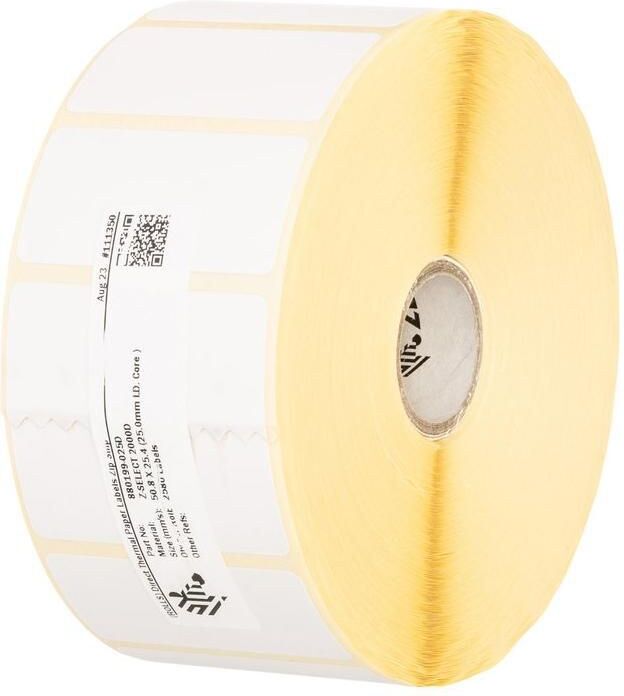
Zebra Z-Select 2000D Direct Thermal Paper Labels 25.4 x 31.8 mm - 12 RollsZebra Z-Select 2000D white, matte, coated direct thermal paper labels, 25.4 x 31.8 mm, perforated, with a permanent rubber-based adhesive that sticks to most surfaces and works at temperatures as low as -40°C. 2,580 labels per roll, supplied as a box of 12 rolls (30,960 labels, Zebra part number 800261-105). Suitable for Zebra desktop printers including the GC420t, GK420t, GX420t, DA402 and LP/TLP 2824 and 2844 series.121,49 £*Shipping: 0,00 £Secure redirect to the provider
-
Zebra Z-Select 2000D Direct Thermal Paper Labels 102 x 76 mm - 12 RollsZebra Z-Select 2000D premium coated direct thermal paper labels, 102 x 76 mm, 930 labels per roll. Supplied as a box of 12 rolls (Zebra part number 800264-305) for Zebra direct thermal label printers.286,49 £*Shipping: 0,00 £Secure redirect to the provider
-
Zebra Z-Select 2000D Direct Thermal Paper Labels 100 x 50 mm - 4 RollsZebra Z-Select 2000D direct thermal paper labels, 100 x 50 mm, coated with a permanent adhesive, on 25 mm cores. Supplied as a box of 4 rolls for Zebra desktop direct thermal label printers.101,99 £*Shipping: 0,00 £Secure redirect to the provider



-
Should one use a thermal pad instead of thermal paste?
Whether to use a thermal pad or thermal paste depends on the specific application and personal preference. Thermal pads are convenient and easy to use, making them a good choice for beginners or for situations where precision application is difficult. However, thermal paste generally provides better thermal conductivity and is often preferred for high-performance applications such as gaming PCs or overclocking. Ultimately, the decision should be based on the specific requirements of the hardware and the user's level of expertise. **
-
What is the difference between thermal energy and thermal power?
Thermal energy refers to the internal energy present in a system due to the motion and interaction of its particles. It is a measure of the total kinetic and potential energy of the particles in a substance. On the other hand, thermal power refers to the rate at which thermal energy is transferred or converted into other forms of energy, such as mechanical or electrical energy. It is a measure of the amount of thermal energy transferred per unit of time. In summary, thermal energy is the total energy present in a system, while thermal power is the rate at which thermal energy is transferred or converted. **
-
What is the difference between convection, thermal radiation, and thermal conduction?
Convection is the transfer of heat through the movement of fluids (liquids or gases) due to differences in temperature. Thermal radiation is the transfer of heat in the form of electromagnetic waves, such as infrared radiation, without the need for a medium. Thermal conduction is the transfer of heat through a material without any movement of the material itself, as heat is transferred through direct contact between molecules. Each of these processes plays a role in how heat is transferred in different scenarios. **
-
What is thermal radiation?
Thermal radiation is a form of electromagnetic radiation emitted by an object due to its temperature. It is a type of heat transfer that does not require a medium, such as air or water, to travel through. All objects with a temperature above absolute zero emit thermal radiation, with the amount and wavelength of radiation depending on the temperature of the object. Thermal radiation plays a crucial role in the transfer of heat energy and is responsible for the warmth we feel from the sun and other heated objects. **

What conducts thermal paste?
Thermal paste is typically made of a mixture of silicone compounds and metal oxides, such as zinc oxide or silver oxide. These compounds are good conductors of heat, allowing them to efficiently transfer heat between the surfaces of a CPU or GPU and a heat sink. The thermal paste fills in microscopic imperfections on the surfaces, creating a more direct path for heat to flow from the processor to the heat sink. **
What is thermal paste?
Thermal paste, also known as thermal compound or thermal grease, is a substance used to improve the heat transfer between a computer's central processing unit (CPU) or graphics processing unit (GPU) and its heat sink. It fills in the microscopic gaps and imperfections between the two surfaces, allowing for better thermal conductivity and heat dissipation. This helps to prevent overheating and ensures optimal performance of the computer components. **
Top-Angebote
Products related to Zebra-102x192mm-Direct-Thermal:
-
Zebra Z-Select 2000D Direct Thermal Paper Labels 25.4 x 31.8 mm - 12 RollsZebra Z-Select 2000D white, matte, coated direct thermal paper labels, 25.4 x 31.8 mm, perforated, with a permanent rubber-based adhesive that sticks to most surfaces and works at temperatures as low as -40°C. 2,580 labels per roll, supplied as a box of 12 rolls (30,960 labels, Zebra part number 800261-105). Suitable for Zebra desktop printers including the GC420t, GK420t, GX420t, DA402 and LP/TLP 2824 and 2844 series.121,49 £*Shipping: 0,00 £Secure redirect to the provider
-
Among which thermal pads is thermal paste used?
Thermal paste is typically used between the CPU and the heatsink to improve heat transfer. It is not used with thermal pads, as thermal pads are pre-applied or placed between components where a more solid interface is needed. Thermal paste is a better choice for areas where there are small gaps or uneven surfaces that need to be filled for optimal heat dissipation. **
-
What is the history of thermal power plants?
Thermal power plants have been in existence since the late 19th century when the first coal-fired power plant was built in the United States. Over time, the technology has evolved to include different types of fuel sources such as natural gas, oil, and biomass. These power plants generate electricity by converting heat energy into electrical energy through the use of steam turbines. Despite advancements in renewable energy sources, thermal power plants continue to play a significant role in meeting the world's energy demands. **
-
Should one use a thermal pad instead of thermal paste?
Whether to use a thermal pad or thermal paste depends on the specific application and personal preference. Thermal pads are convenient and easy to use, making them a good choice for beginners or for situations where precision application is difficult. However, thermal paste generally provides better thermal conductivity and is often preferred for high-performance applications such as gaming PCs or overclocking. Ultimately, the decision should be based on the specific requirements of the hardware and the user's level of expertise. **
-
What is the difference between thermal energy and thermal power?
Thermal energy refers to the internal energy present in a system due to the motion and interaction of its particles. It is a measure of the total kinetic and potential energy of the particles in a substance. On the other hand, thermal power refers to the rate at which thermal energy is transferred or converted into other forms of energy, such as mechanical or electrical energy. It is a measure of the amount of thermal energy transferred per unit of time. In summary, thermal energy is the total energy present in a system, while thermal power is the rate at which thermal energy is transferred or converted. **
Similar search terms for Zebra-102x192mm-Direct-Thermal
-
Zebra Z-Select 2000D Direct Thermal Paper Labels 102 x 76 mm - 12 RollsZebra Z-Select 2000D premium coated direct thermal paper labels, 102 x 76 mm, 930 labels per roll. Supplied as a box of 12 rolls (Zebra part number 800264-305) for Zebra direct thermal label printers.286,49 £*Shipping: 0,00 £Secure redirect to the provider
-
Zebra Z-Select 2000D Direct Thermal Paper Labels 100 x 50 mm - 4 RollsZebra Z-Select 2000D direct thermal paper labels, 100 x 50 mm, coated with a permanent adhesive, on 25 mm cores. Supplied as a box of 4 rolls for Zebra desktop direct thermal label printers.101,99 £*Shipping: 0,00 £Secure redirect to the provider
-
Dragon 100 x 150 mm (4" x 6") Premium Coated Self-Adhesive Direct Thermal Label for Zebra100mm x 150mm (4" x 6") Direct Thermal Shipping Labels – 10 Rolls / 5,000 Labels Key Features LABEL SIZE & QUANTITY: Each label measures 100mm x 150mm (4" x 6") and features a 38mm core diameter. This pack contains 10 rolls with 500 labels per roll, providing a total of 5,000 labels. WIDE PRINTER COMPATIBILITY: Designed for use with a wide range of direct thermal printers, including Zebra, MUNBYN, Rollo, TSC, Toshiba, Citizen, Eltron, Brother, Orion, Arkscan, MFLABEL, Immuson, BESTEASY, Sato, Intermec, Datamax and Printronix. Suitable for printing shipping labels for DPD, UPS, DHL, TNT, FedEx, Hermes, Royal Mail Tracked, Click & Drop, RM24, RM48, SendPro, Parcel2Go, Amazon and other courier and delivery services. Not compatible with laser, inkjet or DYMO printers. ECO-FRIENDLY & SUSTAINABLE: Manufactured with environmental responsibility in mind, these BPA-free and recyclable labels provide a more sustainable labelling solution without compromising on everyday performance. WATERPROOF, OIL-RESISTANT & SCRATCH-RESISTANT: Built for demanding shipping and handling conditions, the labels are designed to resist water, oil and scratches, helping keep printed information clear and readable throughout transit. STRONG & RELIABLE ADHESIVE: Featuring a premium adhesive that securely bonds to common shipping surfaces, including corrugated cardboard and mailing bags. The adhesive provides dependable adhesion for shipping, packaging and general labelling applications. PERFORATED FOR EASY TEARING: Each roll features perforated lines between individual labels, making labels quick and convenient to separate after printing and helping streamline packing and dispatch operations.50,99 £*Shipping: 0,00 £Secure redirect to the provider
-
What is the difference between convection, thermal radiation, and thermal conduction?
Convection is the transfer of heat through the movement of fluids (liquids or gases) due to differences in temperature. Thermal radiation is the transfer of heat in the form of electromagnetic waves, such as infrared radiation, without the need for a medium. Thermal conduction is the transfer of heat through a material without any movement of the material itself, as heat is transferred through direct contact between molecules. Each of these processes plays a role in how heat is transferred in different scenarios. **
-
What is thermal radiation?
Thermal radiation is a form of electromagnetic radiation emitted by an object due to its temperature. It is a type of heat transfer that does not require a medium, such as air or water, to travel through. All objects with a temperature above absolute zero emit thermal radiation, with the amount and wavelength of radiation depending on the temperature of the object. Thermal radiation plays a crucial role in the transfer of heat energy and is responsible for the warmth we feel from the sun and other heated objects. **
-
What conducts thermal paste?
Thermal paste is typically made of a mixture of silicone compounds and metal oxides, such as zinc oxide or silver oxide. These compounds are good conductors of heat, allowing them to efficiently transfer heat between the surfaces of a CPU or GPU and a heat sink. The thermal paste fills in microscopic imperfections on the surfaces, creating a more direct path for heat to flow from the processor to the heat sink. **
-
What is thermal paste?
Thermal paste, also known as thermal compound or thermal grease, is a substance used to improve the heat transfer between a computer's central processing unit (CPU) or graphics processing unit (GPU) and its heat sink. It fills in the microscopic gaps and imperfections between the two surfaces, allowing for better thermal conductivity and heat dissipation. This helps to prevent overheating and ensures optimal performance of the computer components. **
* All prices are inclusive of VAT and, if applicable, plus shipping costs. The offer information is based on the details provided by the respective shop and is updated through automated processes. Real-time updates do not occur, so deviations can occur in individual cases. ** Note: Parts of this content were created by AI.